
SEPTEMBER 1, 2026
5 min read
Looking after your clippers, blades and dryer
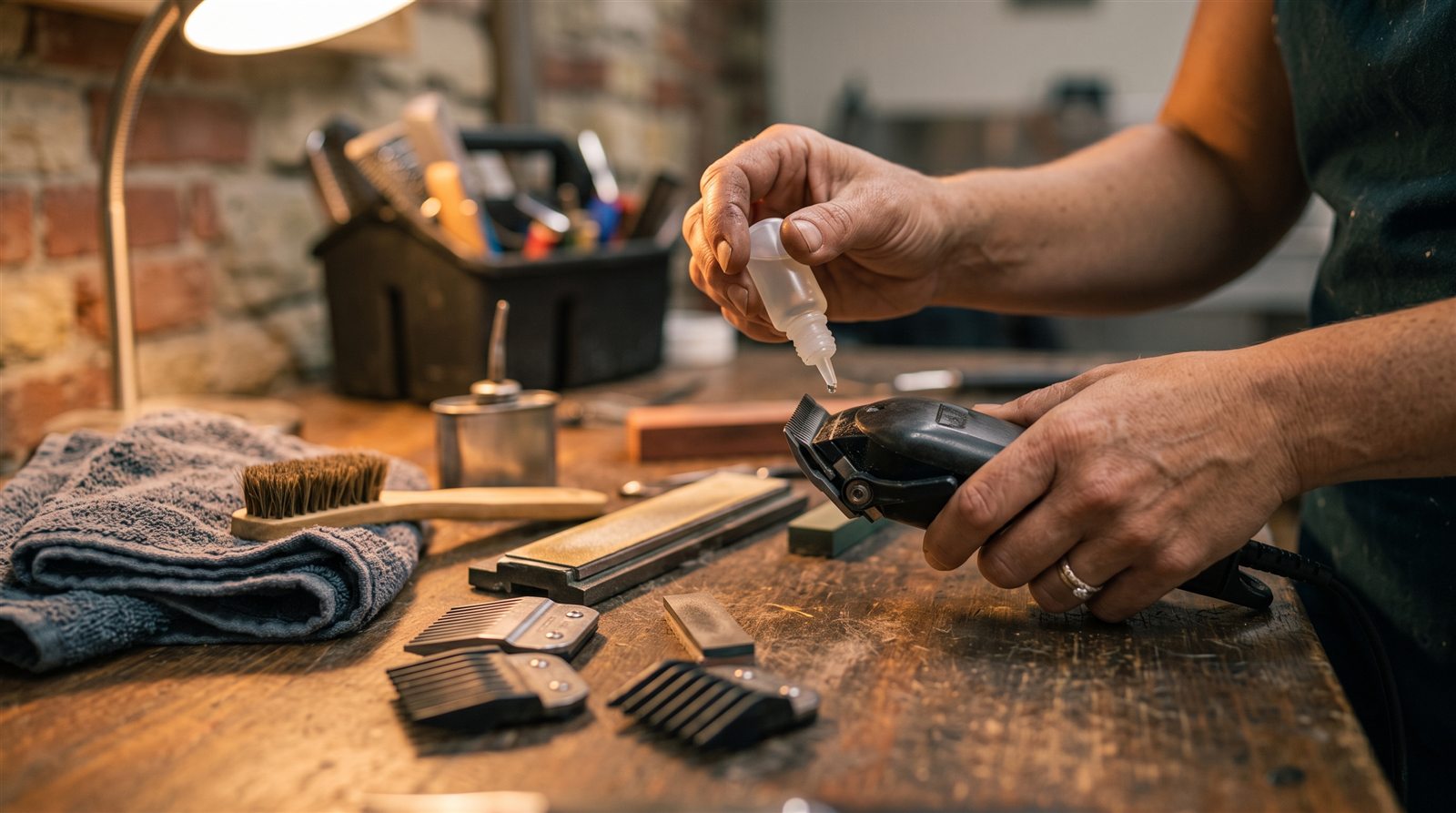
Photo: Krystina Coffey, U.S. Navy, public domain (U.S. Navy photo), via Flickr
The cost of a dull blade
You won't hear a blade go dull. It starts to drag, you slow down to make up for it, and before long you're going over the same shoulder three times to clear the streaks. This guide covers where the oil goes and how often, when to sharpen or retire a blade, and how to keep the dryer clean, with a schedule you can tape inside the supply cabinet at the end.
If a dragging blade adds ten minutes to each of six dogs, you lose an hour a day, which at a $60 hourly floor comes to $60 a day or $300 over a five-day week. Pet Care Insurance prices the clipper kit itself at $150 to $250 in its November 2025 startup guide, and a full sharpening order costs you less than one of those lost days.
Where the oil goes, and how often
Jeff Andrews gave the clearest version of the routine in a 2015 guide for Groomer to Groomer magazine:
- The teeth, each time a blade goes on the clipper. Put one drop across the cutting teeth, then start the clipper so the oil spreads right away.
- The two back rails and the groove on top of the cutter, once a day, and again after you wash a blade. If you skip the groove, the blade screeches and stops cutting the way it should.
- Hair out first. Brush the blade clean with a stiff nylon brush before any oil goes on.
Don't use coolant in place of oil. Andrews writes that coolants, along with WD-40 and Rem Oil, evaporate fast and cause the friction and heat that wear down cutting edges. Use coolant to take the heat out of a blade mid-groom, then oil the blade once it's cool.
Make the oiling part of putting a dog on the table: when the dog goes down, you brush and oil the blade and run it for ten seconds before you start.
Spare blades and sharpening
- Own two of each size you use daily. Swap to the cool spare when a blade heats up mid-groom, instead of pushing through on a nervous dog. PetEdge quotes about four weeks for a sharpening order, so the spare is also what you groom with while the dull one is away.
- Store them dry. The fine teeth rust first, and you'll have to scrap a blade once it rusts.
- Sharpen when a clean, oiled blade still drags. In September 2026, PetEdge charged $7 a blade plus parts for a standard A5-style blade, and $9 for a wide one.
- Retire anything that snags after sharpening. Keep grooming with a blade that snags and sooner or later you'll nick a dog with it.
Work out your own rotation once. If you reach for three blade sizes each day, two of each is six blades, and sending all six out costs $42 at PetEdge's standard price. Stagger them, two a month, so you never send both blades of one size out at once.
Matted coats are the hardest work your blades do all week, which is one more reason to charge extra for them, and you can compare the options in what to charge for a matted dog.
Troubleshooting mid-groom
Most equipment trouble shows up mid-groom, when you have the least time to think about it. Find the symptom in the table and apply the fix so you can get back to the dog:
| Symptom | Likely cause | Fix |
|---|---|---|
| Blade screeches and won't cut cleanly | No oil in the groove on top of the cutter | Oil the rails and groove, run it for ten seconds |
| Streaks on a coat you've already brushed out | Hair packed in the teeth, or a dull edge | Brush out and oil; if it still streaks, swap to the spare and send this one out |
| Blade too hot to hold against your wrist | A long run with no swap | Change to the cool spare, coolant on the hot one, oil it once it's cool |
| Dryer airflow weaker than last week | Clogged end cap or filter | Clean the intake now, vacuum inside at the end of the day |
| Orange spots on the teeth | Stored damp | Dry before storing; if the teeth are pitted, retire it |
The first row comes from Groomer to Groomer's oiling guide and the fourth from its dryer guide. You'll run into the other three when you skip those same routines.
Cleaning the high-velocity dryer
A high-velocity dryer, which Pet Care Insurance prices at $200 to $320 in its startup guide, pulls hair-filled air through its intake all day. In her 2021 dryer guide for Groomer to Groomer, Jennifer Bishop-Jenkins says to clean out the end cap and filter where the air comes in once a day, and to vacuum the interior cavity weekly so hair doesn't get inside and damage the motor.
The daily cleaning takes a couple of minutes at close, and the weekly vacuum a few more. Pay attention to new noises as well: if the dryer starts to rattle or smell like burning, take it in for service while the repair is still cheap.
A maintenance calendar for the supply cabinet
- At each blade change: brush the blade, oil the teeth and give it a ten-second run.
- Daily: oil the rails and the groove, clean the dryer's end cap and filter, wipe down the clippers, check tomorrow's blades.
- Weekly: vacuum inside the dryer, put a drop of oil on the shear pivots and wipe the table hinges.
- Monthly: count your spares and send the dull ones out, so you still have a spare in the drawer for the four weeks they're away.
- Quarterly: check the clipper drive tips, and look into anything that vibrates more than it used to.
Print those five lines and tape them inside the supply cabinet door. For the full startup kit and what each piece costs, see the mobile startup guide; groom times for the coats that cause all this wear are in how long a groom takes. If your wrists ache by the end of the day, how many dogs a solo groomer can do has the 2026 injury numbers.
References
- Groomer to Groomer: How to Properly Oil a Clipper Blade (2015)
- Groomer to Groomer: Using the Force, High Velocity Dryers and Their Role in Grooming (2021)
- PetEdge: Blade and Shear Sharpening Services (accessed September 2026)
- Pet Care Insurance: How to Start a Dog Grooming Business from Scratch (November 2025)
FAQ
How often should I oil my clipper blades?
Oil the cutting teeth each time you put a blade on the clipper, and the back rails and the groove on the cutter once a day, per Groomer to Groomer's 2015 guide. If a blade screeches and stops cutting through the coat, you're overdue.
How often should clipper blades be sharpened?
Sharpen a blade once it still drags after you've cleaned and oiled it. PetEdge charged $7 per standard blade plus parts in September 2026 and quotes about four weeks' turnaround, so keep a spare of each size you use daily.
Why does my high-velocity dryer feel weaker?
Check the intake first, since a clogged end cap or filter is the likely cause. Groomer to Groomer's 2021 dryer guide says to clean the end cap and filter daily and vacuum the interior weekly. If airflow is still weak with a clean filter, take the dryer in for service before the motor fails.
Is coolant spray a substitute for clipper oil?
No. Groomer to Groomer's oiling guide says coolants evaporate fast and leave the friction and heat that wear down cutting edges. Use coolant to cool a hot blade during a groom, and oil the blade before and after.