
SEPTEMBER 23, 2026
6 min read
How do I raise my grooming prices without losing clients?
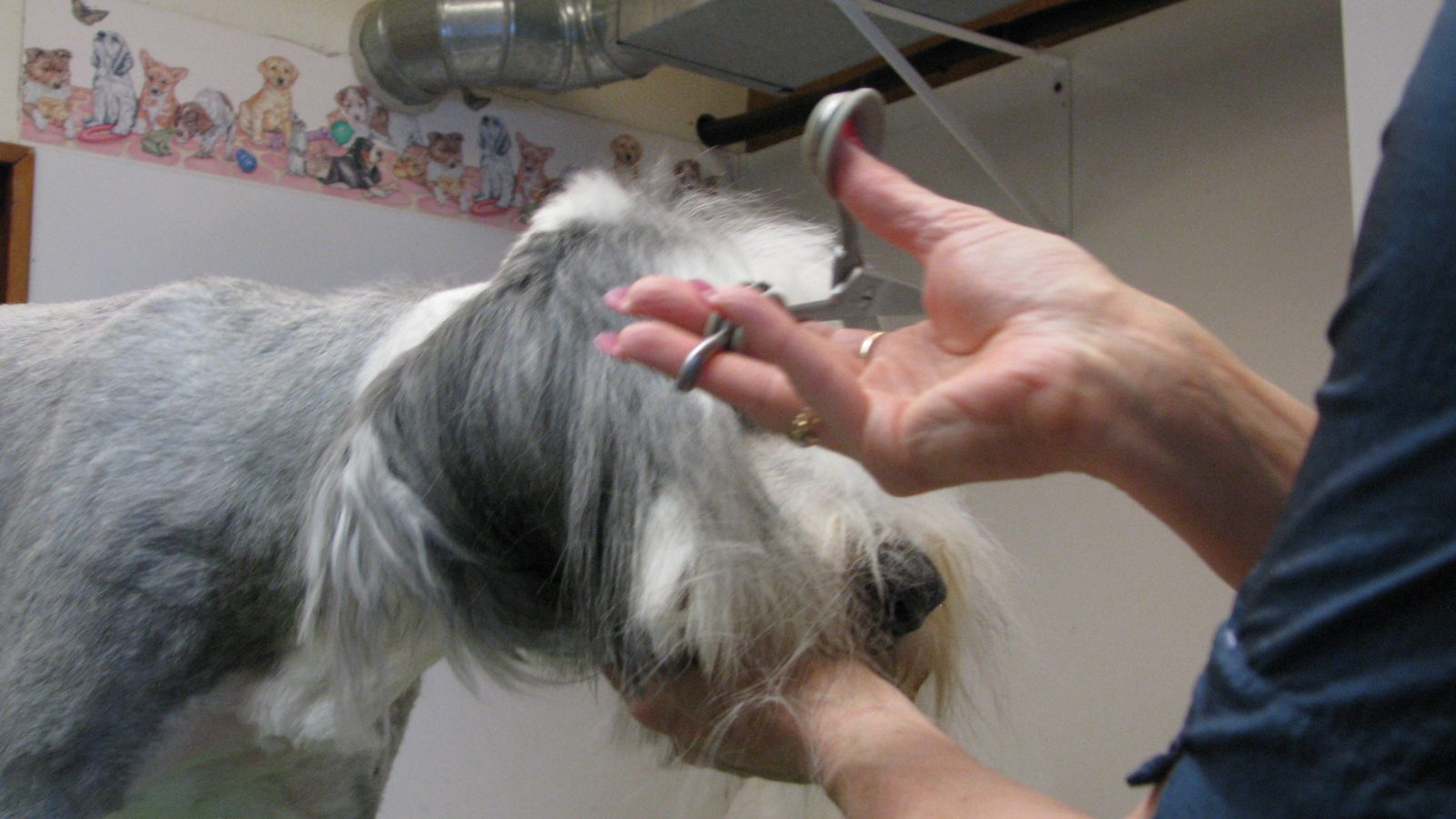
Photo: Amy fricano, CC BY-SA 2.0, via Flickr (cropped)
Two flat years measured against inflation
If you haven't changed your prices since the summer of 2024, you've been taking a pay cut for two years. Between August 2024 and August 2026, the US Bureau of Labor Statistics' consumer price index for all items rose 6.4 percent, so a $75 groom today buys what $70.49 bought two years ago. In those same 24 months the agency's index for pet services rose 10.6 percent, so pet care in general got more expensive faster than prices overall while your list stayed at its 2024 numbers.
To catch up, you need four numbers from your own book: what each service earns per hour now, the size and timing of the raise, how many clients you can lose before it costs you anything, and the weeks of notice your regulars get. Word-for-word answers for a regular who pushes back are at the end.
Timing a raise from your minutes and your bills
Don't wait to raise prices until you feel guilty or tired enough; time the raise from three things in your own records:
- Pay per hour for each service. Divide the price by the minutes the groom takes, tub to last nail. An $85 doodle groom booked as two hours pays $42.50 an hour. If the owner has stretched the visits and that dog now takes two and a half hours, it pays $34, a 20 percent cut on one dog. Getting back to $42.50 an hour at the longer time means charging $106.25.
- Costs that have gone up since your last raise. Add up the monthly increase in shampoo, blade sharpening, the insurance renewal, rent or the van payment, fuel and card fees, then split it across the dogs you groom in a month. That's how much each groom has to rise to cover costs, before you've paid yourself a cent more.
- How far out a new client has to book. If someone new can't get in for three weeks, demand is ahead of your price.
If you see two of the three, raise your prices. One client grumbling about the last bill isn't a signal, and neither is a cheaper shop opening nearby. Before you trust your memory on the minutes, time a full week of real grooms; the revenue-per-hour method is in how many dogs a solo groomer can do in a day.
Sizing the raise after two flat years
Catch up in one step, then add a smaller raise in the same month each year so your regulars expect it. Size it with two rules:
- The floor is inflation since your last change. The BLS all-items index rose 6.4 percent from August 2024 to August 2026, so a $75 full groom needs to be about $80 to hold its value. For each yearly raise after this one, the floor is one year of inflation: 3.4 percent in the 12 months to August 2026, per the BLS August 2026 release.
- Services that run long get more. The doodle above needs 25 percent to get back to $42.50 an hour. A short-coated regular whose groom hasn't gained a minute gets the floor and nothing more.
Round to whole dollars your clients can remember, and watch what rounding does to small prices: $5 is 6.7 percent on a $75 groom and 12.5 percent on a $40 bath. Build the new numbers from your hourly rate with the method in how to price dog grooming, then check them against the market ranges in the 2026 grooming price guide. If your Goldendoodle groom costs less than your medium short-coat groom, you priced the menu without timing the grooms.
The break-even table for a price increase
Say you have 60 regulars paying $75, or $4,500 each time the book turns over. At a 10 percent raise the groom is $82.50, and $4,500 divided by $82.50 is 54.5, so 55 clients at the new price bring in $4,537.50, more than all 60 paid before. You can lose five clients and still come out ahead; a sixth drops you to 54 × $82.50, or $4,455.
For any raise, divide the raise by the new price to get the share of your book you can lose without taking in less. On a 10 percent raise that's 10 divided by 110, or 9.1 percent. Losing a full 10 percent of your clients on a 10 percent raise leaves you 1 percent behind, since 1.10 × 0.90 is 0.99.
| Raise | $75 groom becomes | Break-even loss | Clients you can lose, of 60 |
|---|---|---|---|
| 5% | $78.75 | 4.8% | 2 |
| 8% | $81.00 | 7.4% | 4 |
| 10% | $82.50 | 9.1% | 5 |
| 15% | $86.25 | 13.0% | 7 |
| 20% | $90.00 | 16.7% | 10 |
The table shows revenue only. Each client who leaves also hands back their table time and shampoo, so if five clients with 90-minute grooms leave, you get seven and a half hours back each cycle to sell to someone new or keep.
Before you send anything, go down your client list and mark each client you expect to leave over the increase, $7.50 in the example above. If you mark fewer than the table allows, you come out ahead even in your worst case.
Notice period and the message to send
Give at least 30 days' notice in writing. A full rebooking cycle is better, so each regular hears it from you at the table before it applies; if your regulars are on a six-week cycle, give six weeks. Honor the old price on appointments already booked, even when they fall after the change date.
In FurSlot, your booking page quotes the prices in your breed matrix, so you make the raise by editing them there on the day it starts. Appointments already on your calendar keep their original price, even after a reschedule.
Send this as a text or email, with your details in the brackets:
"Hi [name], it's [your name] at [business name]. Starting [date], [dog's name]'s [service] will be [new price], up from [old price]. It's my first change since [month and year of your last raise], and it covers [one plain reason, such as higher insurance and supply costs]. Anything already on my calendar stays at [old price]. You can see prices and book here: [booking page link]. Thanks for bringing [dog's name] to me, and see you at the next groom."
Put this line on your booking page and on the printed list by your table:
"New prices start [date]. If you booked before then, you keep the price you booked at."
Send the message on the first day of the notice period, then tell each regular in person at their next visit, so a client who's been with you for years doesn't hear it only from a text.
Answers for the regular who pushes back
Have an answer ready for each of these four, one that holds your price without embarrassing the client.
- "That's a big jump." "It is, and it's the first one since [year]. [Dog's name] takes me [minutes] minutes, and [new price] is what that time costs now."
- "The shop on [street] is cheaper." "They may well be, and if you'd like to try them, I'll write down [dog's name]'s blade length and the spots [he or she] doesn't like touched so they don't have to start from scratch."
- "I've been coming to you for years." "You have, and anything you've already booked stays at [old price]. After [date] it's [new price] for all my clients, even the people who've been with me longest."
- "I can't afford that right now." "I understand, and if it helps, a bath and tidy is [price] and keeps [dog's name] comfortable between full grooms. Want to alternate the two?"
Don't offer a discount to end the conversation. A private discount for the client who complains means the clients who didn't complain pay more for the same groom.
References
FAQ
How much should I raise my grooming prices?
Raise by at least the inflation since your last change. The BLS all-items consumer price index rose 6.4 percent between August 2024 and August 2026, so after two flat years you need about 6 to 7 percent, and more on services that now take longer than you priced them for. After that, a smaller raise once a year keeps you level.
How much notice should I give before raising grooming prices?
Give at least 30 days' notice in writing. A full rebooking cycle is better, because each regular then hears it from you at the table before the new price applies. Keep the old price on appointments already booked.
Should I keep longtime clients at their old price?
No. If you grandfather them, the clients who've been with you longest pay the least for good, and the gap gets harder to close each year. Honor what's already booked, then charge all your clients the same.
How many clients will I lose if I raise my prices?
You can't know in advance, but you can work out how many you can afford to lose. Divide the raise by the new price: on a 10 percent raise you can lose about 9 percent of your book with no drop in revenue, before you count the hours those clients hand back.
Should I tell clients why I'm raising prices?
Yes, in one plain sentence, such as higher insurance and supply costs or dogs taking longer than they used to. Skip the apology and the long explanation, since a client who gets a paragraph of reasons can take it as an opening to haggle.