
OCTOBER 14, 2026
6 min read
What should a dog grooming intake form ask?
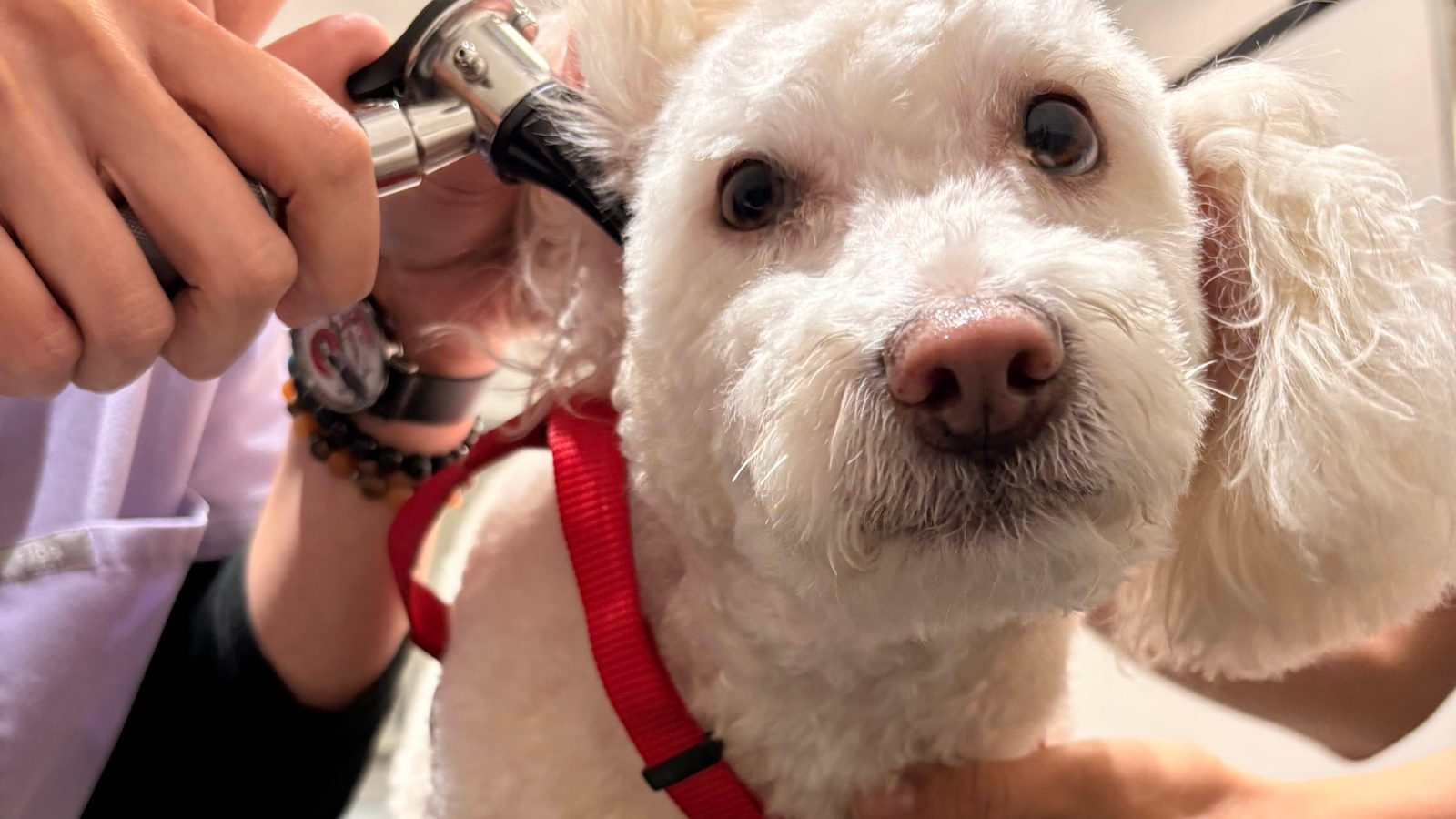
Photo: Veterinarian Pet Alliance, CC BY 4.0, via Wikimedia Commons (cropped)
Ask what the owner already knows
Owners know about most grooming-table problems before drop-off, like a heart murmur or a snap at the vet's office last spring, and won't mention them unless you ask. Some of what owners believe is out of date, too. The rabies shot a client calls "the three-year one" can expire after twelve months if it was the dog's first, because AAHA's 2022 canine vaccination guidelines recommend a booster one year after a dog's first rabies shot "regardless of the formulation."
This guide covers the intake questions that change how you groom, then the rabies certificate checks and release wording for matted dogs and for seniors or dogs with medical conditions.
The intake questions, ready to copy
Print the list on one sheet, front and back. Each answer on it changes something you'll do with the dog.
Owner and pickup
- Your name, mobile number and email.
- A second number we can reach during the appointment.
- Name and phone number for anyone else who may pick up your dog.
- May we text you updates and photos while your dog is here?
The dog
- Name, breed or mix, and birth month and year. A best guess is fine for rescues.
- Weight, and spayed or neutered?
- When was the last professional groom, and what did the groomer do: clipped short, scissored, or bath only?
Health
- Any heart condition, heart murmur, collapsing trachea or seizures?
- Does your dog have a loud snore, pant hard or tire fast in warm weather?
- List all medications and supplements, including anything for anxiety.
- Allergies or skin sensitivities, including to shampoos or flea products?
- Recent surgery, injuries, lumps, hot spots or sore joints we should work around?
- Is your dog losing sight or hearing?
- For females: is she pregnant or in heat?
Behavior and handling
- Has your dog ever bitten or snapped at anyone, including a vet or another groomer, and if so, when and what set it off?
- Which of these does your dog hate: nail trims, feet touched, face or ears handled, the bath, the dryer, getting picked up?
- At the vet, is your dog muzzled or sedated for exams?
- How does your dog behave around other dogs, and in a crate?
Vaccinations
- Rabies: date given and expiration date, copied from the certificate. Bring it, or have your clinic send it to us.
- [Any other vaccine your shop requires, such as Bordetella]: date given and expiration date.
Emergency
- Your vet clinic's name and phone number.
- If your dog needs urgent care and we can't reach you, we'll go to [emergency clinic name]. May we approve treatment up to $[amount], at your cost?
Finish the sheet with a signature line under your cancellation window, so the owner agrees to it once, in writing. The texts for when they break it anyway are in what to say when a client cancels last minute.
Answers that change the appointment
Five answers should change your plan before the bath:
- A bite, ever. Book a slot with no dog waiting behind it and have the muzzle within reach before you start. Plan around what set it off: if a dog bit at the vet over its nails, do its nails early, muzzled, while you're fresh.
- A heart or breathing problem. For flat-faced breeds such as the Pug and the French Bulldog, the American College of Veterinary Surgeons (2023) says blue gums and occasional collapse are common in dogs with brachycephalic syndrome, "especially following over-activity, excitement, or excessive heat or humidity." A dryer and a restraint loop can supply all of those, so skip heated drying and give breaks off the table. If the tongue or gums turn blue, stop.
- Medication. Before you bathe a dog on heart or seizure medication, get its vet's phone number on the sheet.
- Age. AAHA's 2023 senior care guidelines don't set a senior age; they use AAHA's 2019 canine life stage definition, the last 25 percent of a dog's estimated lifespan. For a dog expected to live 12 years that starts at 9 (12 × 0.75), and a dog expected to reach 16 turns senior at 12. Book those dogs longer, with breaks built in.
- Pickup. Hand the dog to the person who dropped it off or to a name on the form. Anyone else waits while you call the owner.
Reading a rabies certificate
No national law covers rabies shots for dogs. AAHA's 2022 guidelines say many jurisdictions require rabies vaccination of dogs by law, and that local and state rules can set booster timing and what happens when a dog is overdue. Ask your county or state health department what applies to a grooming shop where you work.
The national public-health guidance is the 2016 Compendium of Animal Rabies Prevention and Control, from the National Association of State Public Health Veterinarians. Four points from it matter at your counter:
- The expiration date outranks the label. The 2016 compendium calls for a booster one year after a dog's first rabies shot, whatever the dog's age, so a young dog's certificate can run out at twelve months on a 3-year product.
- A first-ever shot needs 28 days. Peak antibody levels arrive within 28 days of a dog's first rabies shot, per the 2016 compendium, and the dog counts as immunized from then. Book first-shot puppies at least 28 days after the certificate date.
- An overdue dog is current again the same day. A dog that has had a rabies shot before counts as current the moment it gets its overdue booster, so an expired certificate costs the client one vet visit.
- Ask for the certificate itself. The compendium says the vaccinating or supervising veterinarian must fill it out in full and sign it, and that a computer-generated copy with the same information is acceptable. A collar tag isn't the certificate.
Copy the expiration date onto the dog's record; eleven months from now, you can't act on "Rabies: yes." FurSlot's dog profile holds each vaccine with its given and expiry dates, flags it once expired and counts down inside 30 days, beside fields for allergies, medications and the last vet visit (see client and pet records). It also sends an intake link the owner fills in on their phone, rabies date included, and the waivers you write get signed the same way, so the paper sheet can go.
Release wording for matted and senior dogs
In two situations, get a signature before you pick up the clippers, because both can end with a dog that looks or acts different at pickup than the owner pictured. The wording below is a plain-English starting point and isn't legal advice. Release rules differ by state, so have a local attorney read your final version.
Matting and shave-down release
[Groomer's name] has shown me the mats in [dog's name]'s coat. Brushing them out would take about [minutes] extra minutes and would be uncomfortable for [dog's name], so I'm choosing a shave-down at [blade or length], and I understand that:
- skin under mats can already be sore or red, and clipping close can show problems the mats were hiding;
- [dog's name] may itch or scratch for a few days;
- the coat will look very different today and will take about [weeks] to grow back;
- today's price is $[amount], matting charge included.
Owner's printed name, signature and date: [name], [signature], [date].
Agree the price before you clip. The numbers are in what to charge for a matted dog.
Senior and medical condition release
[Dog's name] is [age] and has [conditions and medications]. Bathing and drying can tire or stress an older dog or one with a health condition, so I agree that [shop name] may:
- take breaks or end the groom early if [dog's name] seems distressed, and charge only for the work done;
- call me at [phone] if there's a problem, and if I don't answer, take [dog's name] to [clinic name and address] and approve care up to $[amount], which I'll pay.
I've listed all the conditions and medications I know about, and I understand an older or unwell dog can have a medical problem during or after grooming even with careful handling.
Owner's printed name, signature and date: [name], [signature], [date].
Use this release for dogs in the last quarter of their expected lifespan, and for a dog of any age with a heart or breathing condition. Ask the owner to sign both releases again each year.
References
- National Association of State Public Health Veterinarians: Compendium of Animal Rabies Prevention and Control (2016), New York State Department of Health copy
- American Animal Hospital Association: 2022 Canine Vaccination Guidelines, Key Vaccination: Rabies (2022)
- American Animal Hospital Association: 2023 Senior Care Guidelines, Defining the Senior Patient (published 2022)
- American College of Veterinary Surgeons: Brachycephalic Syndrome (2023)
FAQ
Do dog groomers have to check rabies vaccination?
It depends on where you work, because states and local governments set the rabies rules for dogs. Your county or state health department can tell you what applies to a grooming shop.
Is a grooming release form legally binding?
That depends on your state and your wording, and this isn't legal advice, so have a local attorney review yours. Either way, a signed release records that the owner heard the risk and the price before you started.
What if a new client's rabies certificate has expired?
Send them to their vet first. Under the 2016 rabies compendium, a dog that has had a rabies shot before counts as current the moment it gets its overdue booster, so the delay lasts only as long as the vet visit. Ask for the new certificate and book the groom after it.
How often should clients fill out the intake form?
In full at the first visit and once a year after that. At each drop-off, ask if anything's new: medication, surgery, a lump, a bite. Check the rabies expiration date at booking, since that's the answer with a built-in end date.