
SEPTEMBER 1, 2026
5 min read
How do I start a mobile dog grooming business?
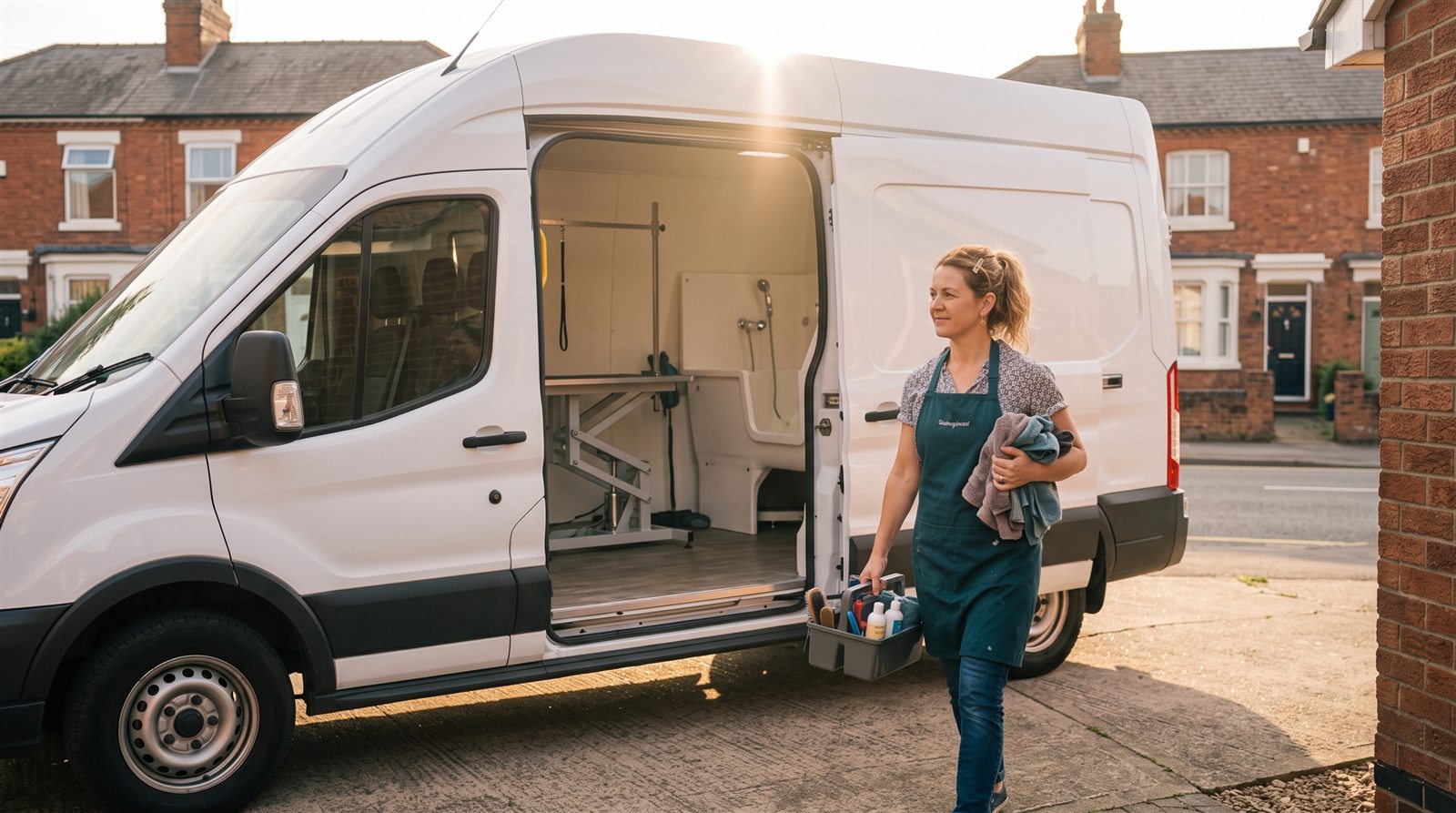
What a client pays a van for
Once you go mobile, you're running the grooming and a vehicle that holds your whole shop, and the vehicle comes with costs a salon groomer doesn't pay: the van payment, water and power, city permits and commercial auto insurance. This guide covers the startup costs, the paperwork, how to plan a route, and your first ninety days.
Start with what you're selling, because that's the case for charging more than a salon:
- Convenience. The owner skips the drop-off and the pickup, and busy owners and multi-dog households will pay for that.
- Less stress for the dog. The dog gets your full attention and skips the kennel. Few groomers cater to anxious or reactive dogs, or to seniors, and owners of those dogs stay with a groomer who handles them well.
- A shorter appointment. You hand the dog back the minute you finish, instead of it waiting in a kennel until the owner can pick it up.
- A higher price. In its 2026 price guide, QC Pet Studies puts mobile at 10 to 30 percent over salon rates.
Startup costs before the van
Pet Care Insurance priced the basic kit in its November 2025 startup guide. The table lists each item at the guide's low and high price, with the totals in the last row:
| Item | Low | High |
|---|---|---|
| Grooming table | $90 | $150 |
| Clippers and blades | $150 | $250 |
| High-velocity dryer | $200 | $320 |
| Bathing tub | $170 | $250 |
| Scissors | $100 | $200 |
| Brushes | $20 | $30 |
| Total | $730 | $1,200 |
Those figures cover the kit a salon groomer would buy too. Van-mounted versions of the tub and dryer cost more, you'll pay extra for water tanks and power, and the vehicle will be the largest amount you sign for. Get prices on a used conversion and a new build from at least three sellers each before you choose. In most cases a used van on a short loan is a better buy than a showpiece whose payment runs through your first two years, as long as you inspect it for water damage and a worn-out generator, the two expensive problems buyers tend to find after the sale.
Before launch, set aside three to six months of expenses, because the van payment starts in the first month, before you've built the client base that's supposed to cover it.
Permits and insurance before the buildout
The US has no national grooming license, and Pet Care Insurance states in its startup guide that the industry has no universal licenses or regulations. You'll still have registrations to file and local rules to check, so make these calls before anyone starts on the van:
- Business basics. Register the name and choose a legal structure. Then open a separate bank account so the van costs and the grooming income stay out of your personal account. If you need an EIN, get it from the IRS itself, which issues them free of charge.
- City and county permits. Some states require permits or general business licenses, according to the same guide. Call the clerk's office in each city you plan to serve, so you learn about a required permit on the phone rather than from a code-enforcement officer who stops you mid-groom.
- Parking and graywater. The insurer tells mobile groomers to follow city parking and graywater disposal rules. Before your first bath, ask the city where you can empty the bath water.
- Insurance for the dogs. You'll need general liability plus animal bailee coverage, which covers the dogs in your care. In September 2026, Pet Care Insurance listed its annual groomer policy from $295.40.
- Insurance for the vehicle. The Insurance Information Institute says a personal auto policy likely won't cover a vehicle whose main use is business, and won't cover one a business owns at all. Get a commercial auto quote before you buy the van, so the premium goes into your budget next to the payment.
Keeping the route tight
You don't earn anything while you're driving between houses, so five dogs on three neighboring streets will earn you more than seven dogs spread across the county. You get that kind of density through the way you schedule:
- Assign neighborhoods to days. Groom the east side on Mondays and the lake streets on Thursdays, for example, and your clients will get used to booking on their street's day.
- Rebook at the curb. Before you pull away, book the next visit on that neighborhood's day, four to eight weeks out depending on the coat.
- Market the street you're on. Neighbors see your van in a driveway and know you already groom on their street, so they'll believe you when you tell them, "I'm at your neighbor's on Thursdays."
- Price the road into each slot. If stops sit 20 minutes apart, a 90-minute groom takes 110 minutes of your day. Use the mobile pricing guide to turn that time, and the miles, into a price.
Add up your drive minutes at the end of each day. Five stops 20 minutes apart put 100 minutes on the road, close to the time a full groom on a large dog takes, and if you see a day like that you should tighten your neighborhoods before you add stops.
A deposit matters more on the road, because a client who no-shows a house call costs you the drive as well as the slot. That's the workflow FurSlot's setup for one van runs on: clients book and pay a flat deposit on your booking page, and the card stays on file for a no-show fee you decide whether to charge.
The first ninety days
For the launch, aim for ten founding clients on a route that makes geographic sense, and rebook each one before you leave their driveway. An opening discount is fine as long as you keep it separate from reviews, because Google's review policy bans offering discounts or free services in exchange for posting one. Ask for the review on its own, and ask for a referral while you're at it.
Charge mobile prices from your first appointment. These are the mobile ranges QC Pet Studies gives in its 2026 guide:
- Small dogs: $60 to $90
- Medium dogs: $80 to $110
- Large dogs: $100 to $150 and up
If you open at salon prices, your first hundred clients will expect salon prices from then on. Write your mobile prices into the price list template before you take the first booking. You'll find the client-getting side, including how to ask for reviews, in your first 20 clients, and what to take at booking in the deposit guide.
References
- Pet Care Insurance: How to Start a Dog Grooming Business from Scratch (November 2025)
- QC Pet Studies: Dog Grooming Prices in 2026, Complete Cost Guide (published August 2025)
- Insurance Information Institute: Business Vehicle Insurance (accessed September 2026)
- IRS: Get an Employer Identification Number (accessed September 2026)
FAQ
Is mobile dog grooming profitable?
Per appointment it often is. QC Pet Studies' 2026 guide puts mobile prices 10 to 30 percent above salons, and you don't pay shop rent. Per day you groom fewer dogs, because the driving takes up slots you could have booked, so your profit depends on how dense your route is.
Do I need a special license to groom dogs from a van?
There's no national grooming license, but some states and cities require permits or general business licenses, and cities set their own parking and graywater rules. Call each city in your planned service area before the buildout.
Can I start mobile grooming without buying a van?
Yes. With portable gear you can do house calls and test your market for about the price of the equipment list, with no van payment. Each client who rebooks a house call is evidence for buying the van, and you can plan your first route around their addresses.
What insurance does a mobile groomer need?
You need general liability plus animal bailee coverage for the dogs in your care; Pet Care Insurance listed an annual groomer policy from $295.40 in September 2026. The van needs commercial auto, because the Insurance Information Institute says a personal policy likely won't cover a vehicle whose main use is business.