
SEPTEMBER 1, 2026
5 min read
How much more should mobile grooming cost?
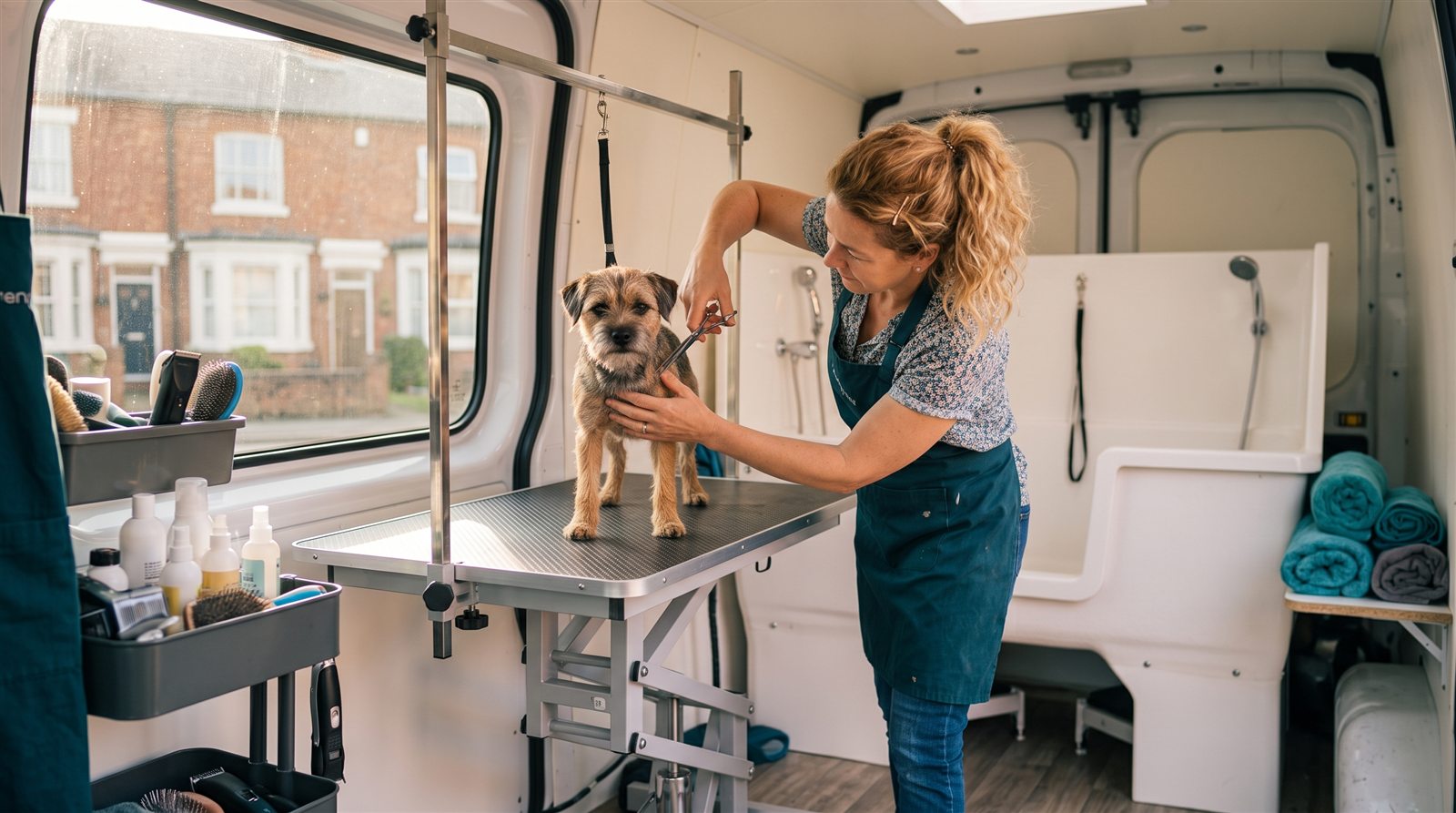
Where the mobile premium comes from
Count one drive against each mobile stop, the drive to get there, and charge the drive away to the next dog. A 90-minute groom with a 20-minute drive then uses 110 minutes of your working day, while a salon groomer doing the same haircut spends 90. If you charge salon prices from the van, you pay for those 20 minutes out of your own hourly rate.
This guide covers how big the premium should be and what a mile costs you, then the price list, the travel fee conversation, and the bookings to turn down.
At a $60 hourly floor (set yours with how to price dog grooming), that groom is $90 in a salon and $110 from the van, 22 percent more. That falls inside the range QC Pet Studies publishes in its 2026 price guide, which puts mobile at 10 to 30 percent over salon rates and gives these mobile prices by size:
- Small dogs: $60 to $90
- Medium dogs: $80 to $110
- Large dogs: $100 to $150 and up
Bark.com puts the gap a little higher on its 2026 cost page, at 20 to 30 percent. In return for the difference, the client gets their afternoon back and a one-on-one groom with no kennel time.
What a mile costs you
Use the IRS business standard mileage rate as your yardstick for what driving costs a business. The IRS set it at 76 cents a mile for July through December 2026, up from 72.5 cents in the first half of the year. At 76 cents, a detour past your usual route costs you this much once you count the drive back:
| Extra distance each way | Round trip | At 76 cents a mile |
|---|---|---|
| 5 miles | 10 miles | $7.60 |
| 10 miles | 20 miles | $15.20 |
| 15 miles | 30 miles | $22.80 |
Those figures leave out your time. If the 10-mile detour adds 30 minutes of driving, your $60 floor adds another $30, so the stop costs you about $45 before you touch the dog. Two-thirds of that is your time, so a travel fee that only covers the miles leaves most of the cost of a far-off single dog unpaid.
Recheck the rate each January. The IRS changed it twice in 2026, once at New Year and again in July, and if you set your fee from last year's rate, it'll fall behind what fuel and upkeep cost you.
Visit minimums and a core radius
- Set a visit minimum. You lose money when you drive twenty minutes for a $15 nail trim. Put the floor at your small-dog full groom price, and sell nail trims as add-ons at stops you're already making.
- Charge for distance past your core radius. Build travel into the base price for clients inside the radius, and don't list it as a separate charge. For addresses past it, state a flat travel fee up front, sized from the mileage table, or turn the booking down with a polite note.
If you book through FurSlot, add the drive to each breed's groom time in your breed price list, because otherwise clients can book back-to-back slots with no time for the drive between them. With the drive added, each slot a client books already includes the road (how it works for one van).
Six lines for a mobile price list
A salon groomer can post sizes and prices and stop there, but your van's price list has to answer the questions a client asks before they'll let you park in their driveway:
- Price by size, using the mobile bands above rather than your old salon numbers.
- Your service area, in plain words: the towns or zip codes, or a radius in miles from a place people know.
- The travel fee past it, as one flat number.
- The visit minimum, so a client can't book a lone nail trim across town.
- The second-dog price at the same address.
- Parking and hookups: a flat spot to park near the door, and whether you'll need their outlet or water.
Start with the price list template for the first line, and add the other five underneath before you print it.
Say the premium out loud
A client comparing your $95 to a salon's $75 deserves the reason, and you can give it in one sentence:
"I come to your driveway, and [dog's name] is the only dog I'm grooming while I'm there."
Most owners accept the difference once they hear that. Put the same sentence on your booking page next to the prices, so clients read the reason before they call to ask. A client who sees it while booking is less likely to treat the price as a surcharge than one who first hears about it in the driveway.
For a client just past your radius, name the fee and offer the way out in the same message:
"Hi [name], you're a little outside the area I cover on [day], so there's a $[fee] travel charge on top of [dog's name]'s groom. If you'd rather skip it, I'm over your way on [other day] and can book you then."
Second dogs, and saying no
A two-dog household pays you twice for one drive, which makes it the best booking in mobile grooming. The second dog saves you a whole stop's drive, twenty minutes plus the miles, so you can take $10 to $15 off it and still come out ahead, and owners with two dogs will book them together to get the discount.
The opposite case is a single small dog booked for a bath forty minutes away. You lose two bookable slots to that stop no matter what you charge. Unless you expect to build a future route around that address, decline with a polite note and suggest a salon near them. If you do make the long drive, take a deposit at booking (how much to ask), because a no-show that far out costs you the whole trip.
Read the mobile startup guide before you plan the route itself; the salon ranges these premiums sit on top of are in the 2026 pricing guide.
References
FAQ
Why is mobile grooming more expensive than a salon?
The client pays for one-on-one service and for your drive time, plus the running costs of a salon on wheels. QC Pet Studies' 2026 guide puts the premium at 10 to 30 percent, which is close to the extra time each dog takes once you count the drive: a 20-minute drive adds 22 percent to a 90-minute groom.
Should I charge a travel fee?
Not inside your normal route; build it into the price there. Past your radius, a flat fee you state up front is fairer than padding the groom price, and at the IRS's 76 cents a mile a 20-mile round trip already costs you $15.20 before your time.
How do I handle two dogs at one address?
Discount the second dog by $10 to $15. That dog saves you a whole stop's drive, so you still come out ahead after the discount, and multi-dog households get a reason to book together.
What is a reasonable service minimum for mobile grooming?
Set the floor at your small-dog full groom. In its 2026 guide, QC Pet Studies puts mobile small-dog grooms at $60 to $90, so with that floor a client can't book a nail trim on its own. Sell small services as add-ons at stops you already have.